Description
Heritage languages do more than connect us to the past—they shape the fabric of our shared future.
Bridging Worlds: The Power of Heritage Languages in Social Cohesion brings together leading scholars, educators, and community advocates from around the globe to explore how heritage languages strengthen identity, foster belonging, and build inclusive societies. Through research, case studies, and lived experiences spanning North America, Europe, Africa, and beyond, this volume reveals the profound role that ancestral languages play in civic participation, intergenerational solidarity, and community resilience.
From bilingual classrooms and immigrant families to policy frameworks and grassroots initiatives, the contributors show that heritage languages are not relics to be preserved but dynamic resources that evolve with each generation. They illuminate how multilingual learners negotiate hybrid identities, how families sustain emotional and cultural ties across continents, and how communities mobilize language as a tool for equity and social cohesion—even in times of crisis.
Whether examining the Seal of Biliteracy in the United States, European multilingual policies, Portuguese and Korean heritage education, diasporic youth experiences, or innovative digital language communities, Bridging Worlds calls for a fundamental shift: to recognize heritage languages as powerful public goods that enrich our civic life, promote cross-cultural understanding, and strengthen the bonds that hold diverse societies together.
A vital resource for educators, policymakers, researchers, community organizers, and anyone committed to multilingualism, equity, and the cultural vibrancy of our interconnected world.
Authors
Issam Salameh Albdairat, Haifa Alsakkaf, Djeneba Bagayoko, Isabelle Barth, Marie Boccou Kestřánková, Richard Brecht, Tony Calderbank, Michaela Chlostová Muñoz, Janine Elya, Renata Emilsson Peskova, Yann Gaboriau, Miglena Hristozova, Felicia Jennings-Winterle, Antri Kanikli, Hanae Kim, Ana Lucia Lico, Marta McCabe, Marigona Morina, Anna Nkomo, Nina Paulovicova, Joy Peyton, Jasmine Pham, Angela Popovic, Fabien Rivière Copa, Steven Sacco, Jessica Salerno, Chase Smithburg, Lenka Vaněčková, and Elizabeth Wardy.
Editors
Fabrice Jaumont & Jane F. Ross
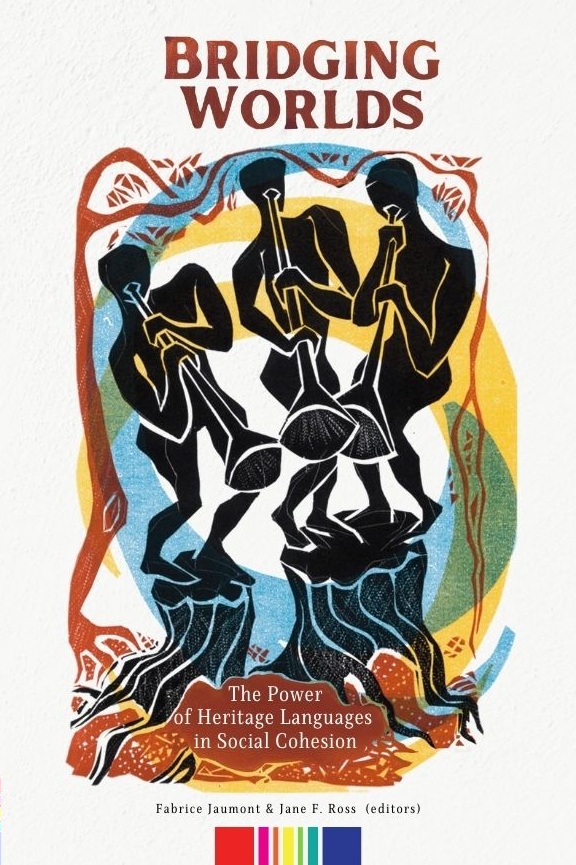
Illustration
Raymond Verdaguer
Table of Contents
Introduction:
Mapping Heritage Languages, Identity, and Social Cohesion
Fabrice Jaumont and Jane F. Ross
Part I – Foundations: Policies, Theory, Global Perspectives
Chapter 1 Sealing the Deal: The Role of Heritage Language Policies in Fostering National Cohesion and Preserving Diversity in the United States
Fabien Rivière Copa
Chapter 2 Advancing Social Cohesion Among Heritage Language Schools, Immigrant Populations, and Formal Language Education in the United States
Richard D. Brecht and Joy Kreeft Peyton
Chapter 3 Streamlining Heritage Language Education in Europe: From European Policies to State Support Measures
Renata Emilsson Peskova, Marie Boccou Kestřánková, Lenka Vaněčková, and Michaela Chlostová Munoz
Chapter 4 The Role of the French Heritage Language Program in Promoting Bilingualism and Cultural Integration for Francophone Students in the United States
Yann Gaboriau
Chapter 5 On How to Bridge Communication Between Multilingual Families and Schools: Tonga Schools Network
Isabelle Barth, Miglena Hristozova, and Antri Kanikli
Part II T – Families, Identity, Intergenerational Transmission
Chapter 6 Teachers of Portuguese as a Heritage Language: Their Profiles, Contexts, and Perspectives
Felicia Jennings-Winterle
Chapter 7 Korean-American Parents’ Efforts to Transmit the Korean Language to their Third-Generation Korean-American Children
Hanae Kim
Chapter 8 Portuguese in the Heart: Identity, Belonging, and Heritage Language from Adolescents’ Perspectives
Ana Lucia Lico
Chapter 9 “Harmonizing Hyphens”: Navigating Multiracial Identities in Mandarin-English Bilingual Classrooms
Jasmine Pham
Chapter 10 Between Two Worlds: The Arabic Language and Identity in Italy’s Second Generation
Haifa Alsakkaf
Chapter 11 Bridging Worlds: Exploring the Dual Identities of Arabic Heritage Students
Issam Salameh Albdairat
Part III – Schools, Communities, Innovation
Chapter 12 Transformation of Heritage Language Schools during the Pandemic: Connectivity, Community, and Identity
Nina Paulovicova, Renata Emilsson Peskova, and Marta McCabe
Chapter 13 The Challenges of Albanian Heritage Language Schools in Canada
Marigona Morina
Chapter 14 Home is a Language : Building Diaspora Belonging Through Heritage Tongues
Djeneba Deby Bagayoko
Chapter 15 The Arabic Speaking Competition: A Tool for Heritage Language Motivation and Identity Affirmation
Tony Calderbank, Janine Elya, and Chase Smithburg
Chapter 16 English as a Heritage Language: A Case Study in Calabria, Southern Italy
Elizabeth Wardy, Jessica Salerno, and Steven J. Sacco
Chapter 17 Translanguaging in a Third Space: Enhancing multilingualism and literacy through a bilingual buddy reading program in South Africa.
Sibhekinkosi Anna Nkomo
Chapter 18 AI For Heritage Language Learning: Insights from Mind Genomics
Angela Popovic
Conclusion:
Toward a Transformative Multilingual Future
Fabrice Jaumont and Jane F. Ross





Reviews
There are no reviews yet.