


Phase 2: Locating a School & Developing a Convincing Rationale
At the end of their collaborative work, the various committees must be prepared to present the data to a principal and then to the school community. Before approaching a school principal with your idea, it is advisable to build a local strategy and a persuasive argument that will help you convince the school principal as well as other appropriate administrators of the importance of your proposal.
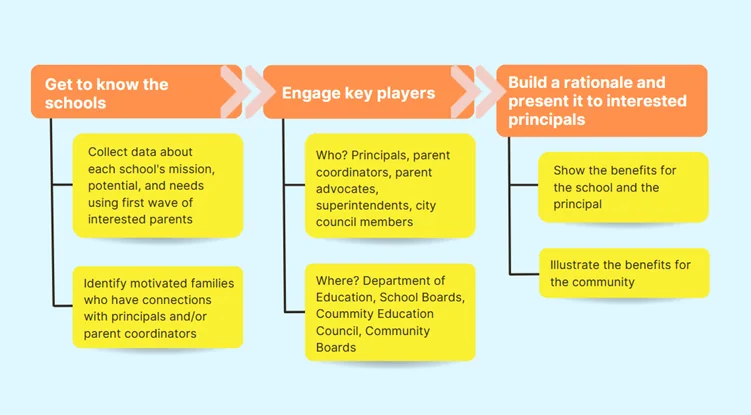
Arguments in favor of dual-language programs include:
- A new principal might be seeking recognition and a dual-language program would be a concrete way to leave their mark on the school and community
- A successful program can bring visibility, advance a school’s reputation, and attract funding
- Dual-language programs provide a lifelong gift of a second language to all children
- They preserve cultural and linguistic heritage for second or third-generation families
- Motivated families contribute through fundraising and community support
- They enrich the school with arts, music, food, and community engagement
- They can help under-utilized schools with new identity and purpose
- They attract families to schools and support socioeconomic integration
- Districts may offer grants for planning and professional development
- Support may also come from embassies, consulates, businesses, and foundations
When you are granted an interview with a school principal, present your project in a professional and compelling way. Focus on the benefits to children and the wider community. Provide clear demographic data, funding opportunities, and documentation on family interest.
After a positive meeting, bring in more stakeholders—parents, teachers, and community leaders—followed by outreach to foreign officials, elected representatives, and donors. By taking these steps, you’ll build strong momentum and trust for launching a successful dual-language program.